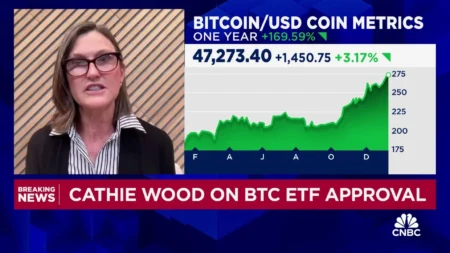



Bitcoin Price Forecast: BTC Could Dip Lower as ETF Demand Fades
Analyzing Bitcoin's Price Trajectory in the Wake of Cooling ETF Enthusiasm
As the craze for Bitcoin Exchange-Traded Funds (ETFs) begins to temper, Bitcoin may witness a downturn in its price, signaling potential unease among investors. Since the peak of Bitcoin’s price in late 2021 when it nearly touched $69,000, the digital currency landscape has been highly volatile, influenced significantly by institutional interest and regulatory developments.
Key Takeaways
The ETF-Hype Decline: Understanding the Impact
In the past year, Bitcoin ETFs had been seen as a bridge bringing the traditional financial world closer to the cryptocurrency sphere. The initial enthusiasm for such financial products led to heightened buying activity, pushing BTC prices upwards as both retail and institutional investors piled in. However, recent trends indicate a shrinking appetite for Bitcoin ETFs, particularly as the novelty wears off and performance fails to meet investor expectations over time.
Several factors contribute to this cooling demand:
-
Regulatory Concerns: Increasing scrutiny from financial regulators like the U.S. Securities and Exchange Commission (SEC) might be dampening the spirits. The SEC has been cautious about approving cryptocurrency ETFs, particularly those directly holding Bitcoin, due to worries about potential market manipulation and lack of liquidity.
-
Market Saturation: With several Bitcoin ETFs already on the market and more in the pipeline, there may be a saturation point being reached, impacting the initial exclusive edge these funds might have had.
- Rising Competition from Other Crypto Assets: As newer and possibly more scalable cryptocurrencies gain traction, Bitcoin’s relative appeal might be diminishing. Technologies underpinning competing assets are being touted as superior, with some focusing on privacy, others on environmental sustainability, and some on transaction speed.
Future Price Forecasts
In response to the fading ETF demand, Bitcoin’s price forecast appears bearish in the short term. Analysts suggest several potential lows and highs Bitcoin could test in the coming months:
-
Lower Demand, Lower Prices: With diminished ETF inflows, the reduced demand might lead to a lower trading range for Bitcoin. If investor interest continues to wane, support levels could be tested near lower thresholds, possibly around the $20,000 to $30,000 range, depending on market conditions and investor sentiment.
-
Technical Resistance: On the flip side, if Bitcoin manages to maintain a psychological level of support and if any positive regulatory news were to break, there could be resistance near the $45,000 mark. However, this is contingent on broader market recovery and technological advancements within the Bitcoin network itself, such as improvements in scalability and transaction speeds.
- Impact of Macro Economic Factors: It’s also essential to consider the macroeconomic backdrop that includes interest rate changes by central banks, inflationary pressures, and geopolitical tensions, all of which could sway Bitcoin’s price significantly.
Conclusion
As the demand for Bitcoin ETFs shows signs of contraction, investors in the cryptocurrency market are urged to brace for potential price corrections. This anticipated trend highlights the volatile and unpredictable nature of Bitcoin and underscores the importance of a cautious investment strategy in the crypto space. The future of Bitcoin remains ever-tied to developments both within the internal crypto industry and external economic factors, pointing to a complex interplay of influences that investors must navigate carefully.
Related: More from Bitcoin News | BTC Surges Above $71K Amidst Middle East Tensions in Bitcoin | Bitcoin ETF Inflows Fail to Boost Price: Analyst Explains Why