

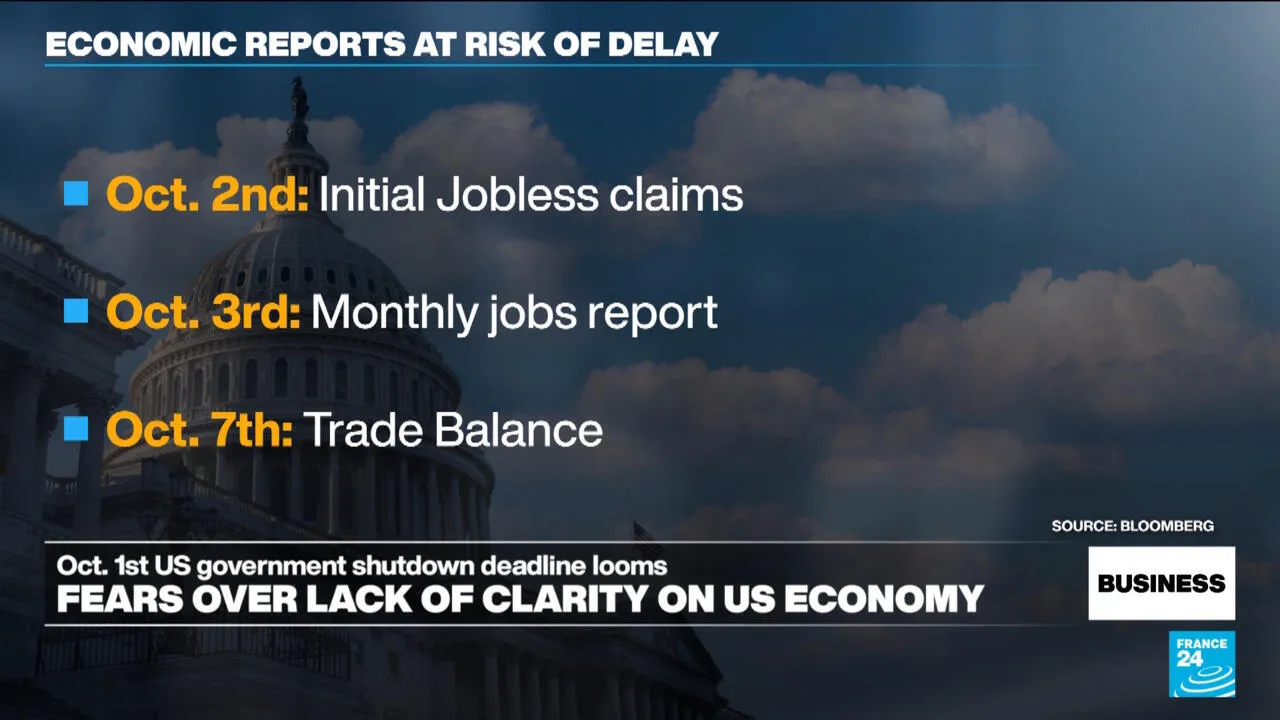

As the deadline for a potential government shutdown approaches, concerns are mounting over the disruption of critical economic data releases. A government shutdown occurs when Congress fails to pass funding legislation, leading to the temporary closure of non-essential federal services. This situation not only affects government employees but also has far-reaching implications for the economy, particularly in terms of data that informs business decisions and market strategies.
Economic indicators, such as employment figures, inflation rates, and GDP growth, are vital for understanding the health of the economy. These reports, often released monthly or quarterly, guide policymakers, investors, and businesses in their planning and decision-making processes. However, during a government shutdown, many of these reports may be delayed or entirely halted, creating uncertainty in the markets.
The last significant government shutdown in late 2018 and early 2019 saw the postponement of crucial data releases, which left analysts and investors scrambling for information. With the current political climate and ongoing budget negotiations, the risk of a similar scenario looms large. Economists warn that a shutdown could exacerbate existing economic challenges, including inflation and labor market instability, by depriving stakeholders of timely and accurate data.
As the clock ticks down, all eyes are on Congress to reach a resolution that will prevent a shutdown and ensure the continuity of essential economic data releases. The stakes are high, and the implications of inaction could be felt across the economy for months to come.
Related: More from Regulation & Policy | US Court Sets Deadline for Sam Bankman | WLFI Cryptocurrency Investigation: What House Democrats Uncover