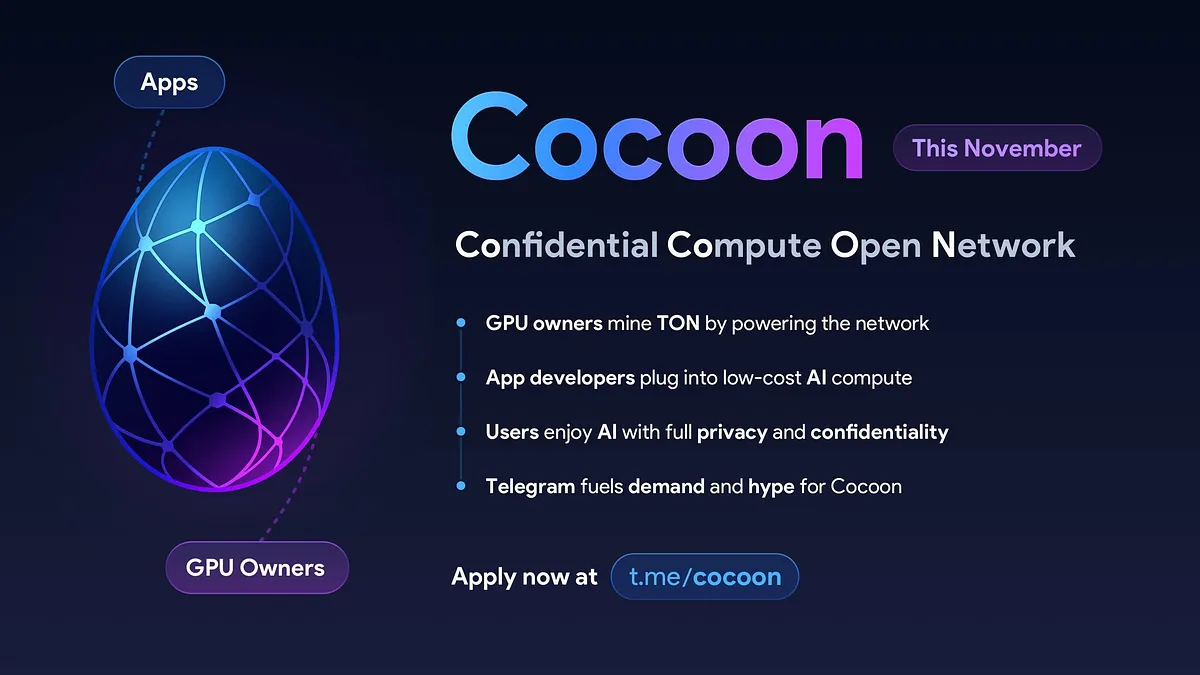

Telegram Launches Cocoon: A Decentralized AI Network That Pays GPU Owners in Crypto
In a significant move that marks its foray into the decentralized digital economy, Telegram has announced the launch of Cocoon, an innovative decentralized Artificial Intelligence (AI) network. This new platform is designed to harness the power of thousands of independently owned graphical processing units (GPUs) to process AI tasks, rewarding contributors in cryptocurrency. This development is not only a step forward for Telegram in its technological offerings but also a major influencer in the realm of blockchain technology and AI.
Key Takeaways
The Genesis of Cocoon
Cocoon was conceptualized as a response to the growing need for computational power in the field of AI, paired with the rise of blockchain technology. The platform operates on a simple premise: individuals who own GPUs can lend their computational power to the network to help run AI processes. In return, they are compensated with cryptocurrency, making it a beneficial arrangement for tech enthusiasts who have invested in powerful hardware.
The name ‘Cocoon’ signifies the seamless and secure environment that Telegram aims to provide for both the AI computations and the GPU lenders. According to Pavel Durov, CEO of Telegram, “Cocoon is designed to be a self-contained ecosystem that not only fuels the growth of AI but also rewards the very contributors that make it possible.”
How Does Cocoon Work?
At its core, Cocoon utilizes a decentralized network of nodes, each powered by one or more GPUs owned by individuals around the world. These nodes collectively process complex AI tasks which are beyond the capabilities of a single machine. The tasks can range from deep learning and natural language processing to image recognition and much more.
To participate, GPU owners need to register on the Cocoon network. Once approved, their hardware is employed to perform tasks, and the completion of these tasks triggers a smart contract within the blockchain network, releasing payment in the form of cryptocurrency directly into the wallet of the GPU owner.
Benefits of Cocoon
This model presents numerous benefits:
-
Profitability for GPU Owners: Individuals with unused or underutilized GPUs can now have a continuous stream of income, providing a return on their hardware investment.
-
Decentralization of AI Processing: By decentralizing the process, Cocoon ensures that the power of AI is not just held in the hands of a few large corporations, but rather is distributed across a global network, promoting fairness and democratization of technology.
-
Enhanced Speed and Efficiency: Distributed computing allows for faster processing of complex AI tasks, accelerating innovation and efficiency in AI research and application.
- Reduction in AI Development Costs: Small companies and independent developers can access the computation power of a distributed network without the need to invest in expensive infrastructure.
Future Implications
The launch of Cocoon is likely to have far-reaching implications. For one, it could challenge the status quo of AI research and development, traditionally dominated by tech giants with substantial resources. Additionally, it could spur the development of more such decentralized networks, each contributing to an ecosystem where technology and financial rewards are aligned more closely with the contributors of resources.
By offering cryptocurrency as a reward, Telegram is also tapping into the growing interest in digital currencies and blockchain, potentially increasing the adoption and value of cryptocurrencies.
Conclusion
With Cocoon, Telegram is setting a precedent for the future of decentralized AI networks. This innovative model could lead to more equitable distribution of technology’s benefits, democratizing access to AI capabilities and providing a new revenue stream for GPU owners. As the platform evolves, it will be interesting to see how it impacts the broader landscape of technology and digital economy. Telegram’s move could very well be a pioneering step towards a more decentralized, fair, and efficient digital future.
Related: More from Regulation & Policy | Trump backs Clarity Act, criticizes banks for undercutting GENIUS in Crypto Regulation | Paul Atkins: Trumps Crypto Legacy in Crypto Regulation