


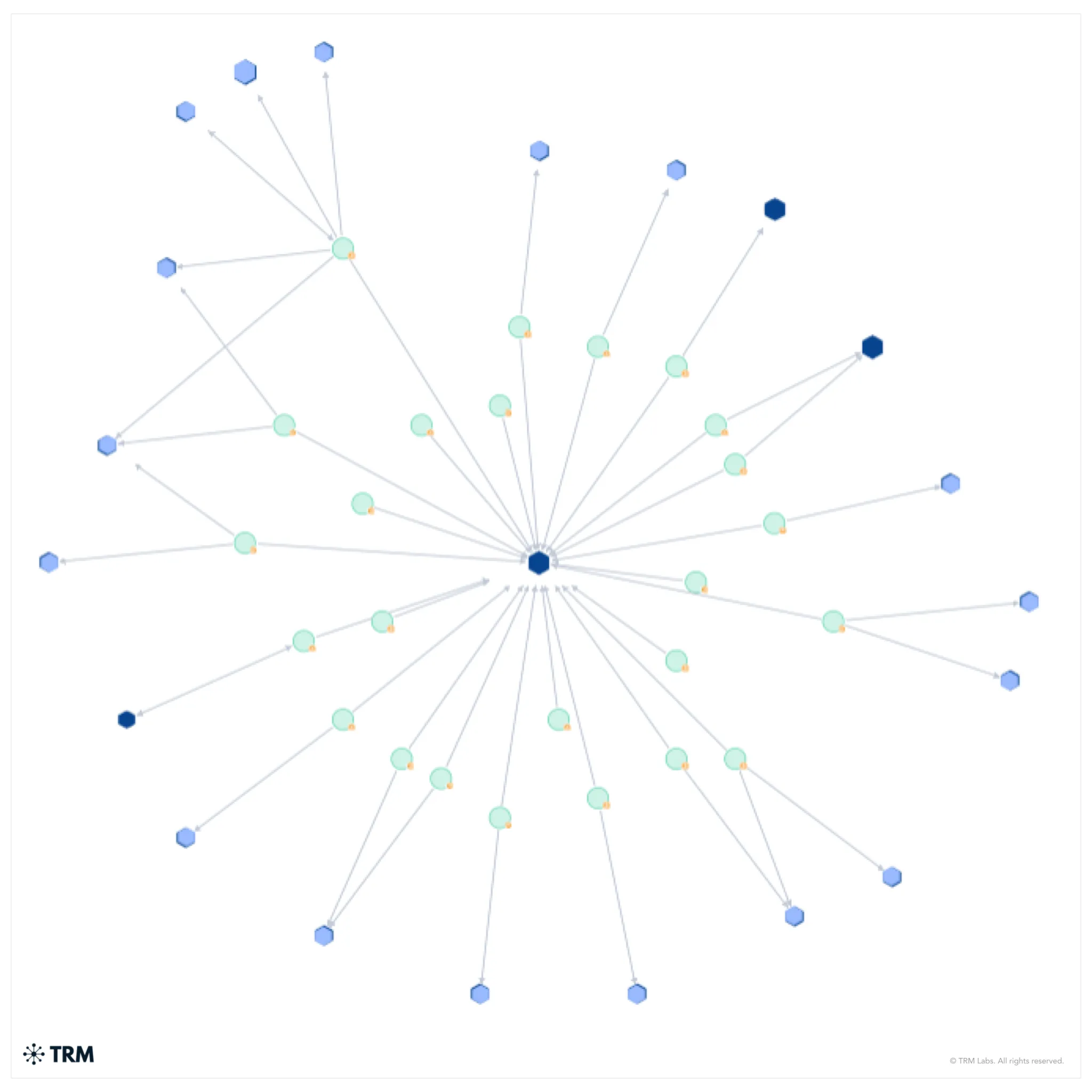

Inside the Crypto Network of Cambodia’s Huione Crime Empire
In recent years, the digital realm has witnessed the emergence and consolidation of various criminal enterprises, leveraging new technologies to expand their activities. Among these, the Huione crime empire in Cambodia has carved out a particularly notorious reputation, not only for its scope but for its adept use of cryptocurrency to bolster its operations. This article delves into the Huione crime empire, exploring how it has built a complex network that manipulates the potentials of cryptocurrency to facilitate and obscure its illicit activities.
Background of the Huione Crime Empire
Originating in the early 2000s, the Huione group began as a local gang involved in petty theft and gambling circuits in Phnom Penh. Over the years, the organization expanded its reach, diversifying into drugs, human trafficking, and cybercrime. By the 2010s, Huione had established itself as a formidable entity within Cambodia’s criminal underworld, with connections stretching across Southeast Asia.
Transition to Cryptocurrency
The shift to cryptocurrency was a strategic move by the Huione empire, driven by the need for anonymity, ease of cross-border transactions, and the evasion of law enforcement and regulatory oversight. Recognizing the benefits of such digital assets, Huione began laundering considerable amounts of money through cryptocurrencies in the mid-2010s. They exploited the pseudonymous nature of transactions to mask their illicit origins, investing in various digital tokens and using crypto exchanges that had lax regulatory checks.
Operational Tactics in the Crypto Domain
Huione’s strategy in the crypto realm involves several sophisticated tactics. First, the organization often uses “mixing” services to obscure the trail of their cryptocurrency transactions. Mixing services, or tumblers, blend potentially identifiable or “tainted” cryptocurrency funds with others, making it difficult to trace their origins.
Second, Huione has reportedly engaged in “cryptojacking,” which involves the unauthorized use of someone else’s computer to mine cryptocurrency. This not only provides them with an income stream but does so at virtually no cost while also heightening their ability to remain under the radar.
Furthermore, the empire has ventured into Initial Coin Offerings (ICOs), creating and promoting fraudulent digital tokens to investors. These ICO schemes are typically backed by elaborate marketing strategies and manipulated trading volumes to present an illusion of legitimacy and potential profitability.
The Legal and Social Implications
The activities of the Huione crime empire in the cryptocurrency space have profound legal and social implications. On the one hand, their operations have highlighted significant challenges in global financial regulatory frameworks, especially in dealing with decentralized, borderless crypto-assets. Law enforcement agencies find themselves constantly at a technological and jurisdictional catch-up in their fight against these cyber-enhanced criminal activities.
On the social front, the empire’s activities have detrimental impacts on the very fabric of society. From fueling drug trafficking to financing human trafficking rings, the ramifications are severe and far-reaching. The ease and speed at which money can move across borders in crypto form, coupled with the difficulty in tracing such transactions, mean that criminal enterprises like Huione are often a step ahead of law enforcement.
Conclusion
The Huione crime empire in Cambodia exemplifies a growing trend where traditional criminal elements entwine seamlessly with cutting-edge technology. This has not only transformed their operational modalities but has also posed new, intricate challenges to authorities worldwide. As the global community continues to grapple with the implications of cryptocurrency in mainstream financial systems, the case of Huione serves as a stark reminder of the dark possibilities harbored within the crypto network. Adequate and adaptive regulatory frameworks, along with international cooperation, are imperative to curb these digital age criminals who leverage anonymity and decentralization in ways that were previously unimaginable.
Related: More from Regulation & Policy | Trump backs Clarity Act, criticizes banks for undercutting GENIUS in Crypto Regulation | Paul Atkins: Trumps Crypto Legacy in Crypto Regulation


