


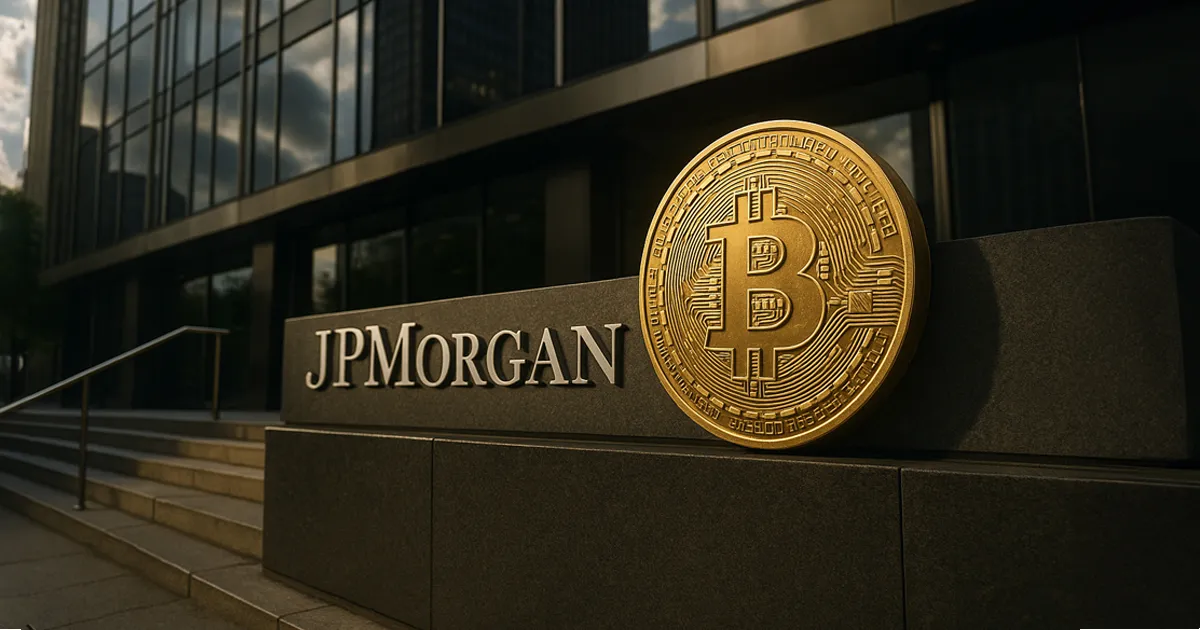

JPMorgan's Bitcoin Collateral Initiative: A Potential $20 Billion Liquidity Boost
Introduction
In a groundbreaking development for the cryptocurrency market, JPMorgan, one of the largest and most influential financial institutions in the world, is setting the stage for potentially unlocking $20 billion in liquidity. This comes with its innovative plan to allow Bitcoin to be used as collateral for loans. Such a move not only signifies a major shift in the attitude of traditional banks towards cryptocurrencies but also highlights the growing acceptance of digital assets in mainstream finance.
Key Takeaways
JPMorgan's Bitcoin Collateral Plan
JPMorgan has proposed to treat Bitcoin and potentially other cryptocurrencies as legitimate collateral, similar to traditional assets like real estate or stocks. This paradigm shift means that holders of Bitcoin could leverage their investments without having to sell them, creating a significant liquidity flow and broadening the utility scope of Bitcoin beyond just a trading and investment asset.
The mechanics of this are straightforward: clients will deposit their Bitcoin into a JPMorgan-controlled wallet, where it will serve as collateral against which clients can borrow funds. This service targets not just individual investors but also institutional players who are increasingly interested in cryptocurrencies but require traditional finance mechanisms to manage their investments.
Impact on Liquidity
The introduction of Bitcoin as a collateral option is expected to unlock substantial liquidity for multiple reasons:
-
Increased Accessibility: By allowing Bitcoin to be used as collateral, JPMorgan is removing a huge barrier for those who have significant investments in Bitcoin but were previously unable to leverage these assets to gain liquidity without selling them.
-
Institutional Engagement: As traditional financial institutions get involved, it de-risks investments in Bitcoin for larger institutional investors, who may have been on the fence due to the lack of traditional financial infrastructure support.
- Market Stability: This move could help stabilize Bitcoin prices over the long term. As investors are not forced to sell their holdings for cash needs, less market volatility occurs due to large unloading of the asset.
Estimation of $20 Billion in Liquidity
The figure of $20 billion is based on current estimates of untapped liquidity that could be effectively utilized if even a fraction of Bitcoin holders begin using their holdings as collateral. This would not only give these holders more flexibility in managing their assets but also inject more capital into the financial system, promoting further investment and spending.
Challenges and Considerations
While the initiative is promising, it is not without its challenges:
-
Price Volatility: Bitcoin’s price volatility might pose significant risks to both the bank and the borrower. The value of the collateral can drastically change overnight due to the market’s high volatility, affecting loan agreements.
-
Regulatory Compliance: Cryptocurrencies are still in a regulatory grey area in many jurisdictions. JPMorgan will have to navigate a complex regulatory landscape to make this a viable option across different regions.
- Security Concerns: Handling and securing a large amount of Bitcoin will require robust security measures to prevent theft and hacking.
Conclusion
JPMorgan’s plan to use Bitcoin as collateral is a visionary step that reflects how traditional financial institutions are evolving with the changing dynamics of asset management in the age of digital finance. By unlocking $20 billion in liquidity, the initiative is poised to bring more stability and utility to the cryptocurrency market, potentially accelerating the fusion between traditional and digital finance realms. This bold move could pave the way for other financial giants to follow suit, possibly leading to broader economic implications for global financial markets.
Related: More from Bitcoin News | Bitcoin Surges to $71,800 Amidst Middle East Tensions | Bitcoin Derivatives Move Closer to Onshore Approval by CFTC in April