


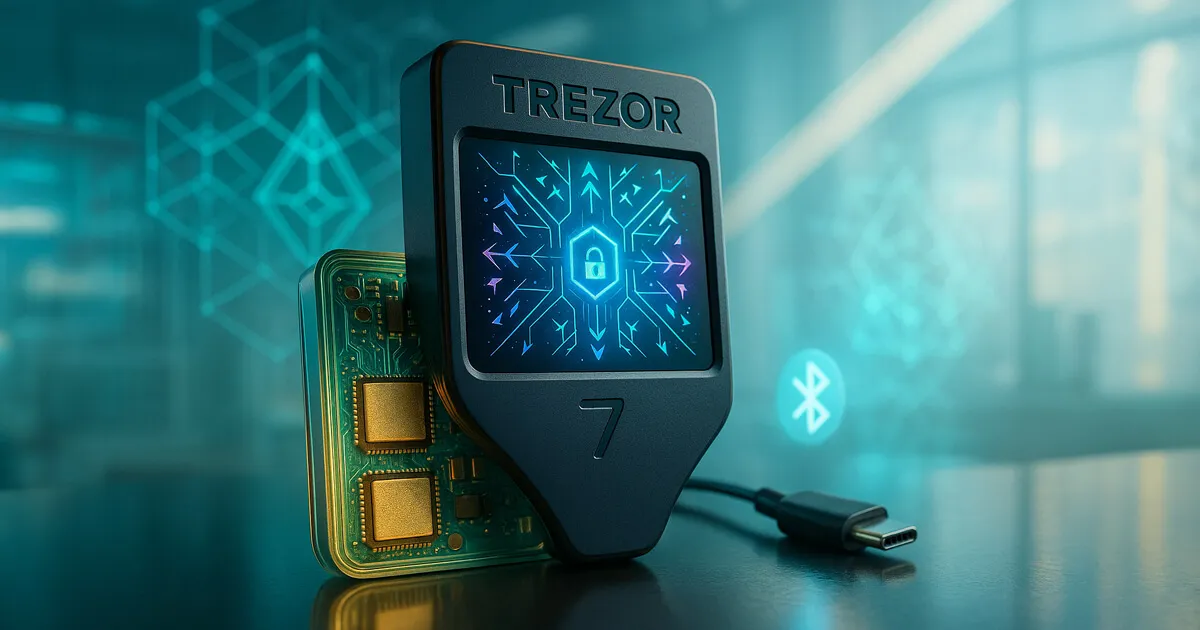

Trezor, a leading brand in the cryptocurrency hardware wallet space, has recently announced the launch of a “quantum-ready” hardware wallet. This development carries significant implications for the Bitcoin community and the broader realm of cryptocurrencies. Quantum computing has long been a subject of both curiosity and concern among developers and enthusiasts in digital currency circles, primarily due to its potential to disrupt existing cryptographic standards. Here, we delve into what Trezor’s quantum-ready wallet means for Bitcoin, exploring its necessity, functionality, and potential impacts.
Key Takeaways
Understanding Quantum Computing’s Threat to Cryptography
The essence of cryptocurrencies like Bitcoin is their reliance on cryptographic principles to secure transactions and ownership. Bitcoin, for instance, uses public-private key cryptography to ensure that only the owner of the private key can authorize transactions. However, quantum computers employ principles of quantum mechanics that allow them to solve specific problems much faster than classical computers.
Particularly concerning is the potential for quantum computers to break the elliptic curve digital signature algorithm (ECDSA), which is used by Bitcoin for digital signatures. If a sufficiently powerful quantum computer is realized, it could feasibly derive a user’s private key from their public key, fundamentally compromising Bitcoin’s security.
Trezor’s Quantum-Ready Solution
Responding to these fears, Trezor’s introduction of a quantum-ready hardware wallet is both timely and critical. This next-generation wallet is designed to be resistant against the threat posed by quantum computers. While the details of the technology behind Trezor’s quantum-ready wallet have not been fully disclosed, it likely involves the implementation of quantum-resistant cryptographic algorithms.
Quantum-resistant cryptographic algorithms are those believed to be secure against an attack by a quantum computer. There are several approaches to quantum resistance, including hash-based cryptography, lattice-based cryptography, multivariate quadratic equations, and others. These algorithms are designed to increase the computational difficulty and resource requirements that a quantum computer would need to break them, rendering quantum attacks unfeasible.
Implications for Bitcoin Security
The release of a quantum-ready hardware wallet by Trezor is a proactive step towards safeguarding Bitcoin from future quantum threats. This move not only enhances the security profile of Bitcoin but also gives users greater confidence in holding and transacting in Bitcoin and other cryptocurrencies. The assurance of resistance to quantum attacks might become a crucial selling point for crypto-hardware in the foreseeable future.
Market Response and Future Outlook
The announcement of a quantum-ready wallet is expected to influence other companies in the cryptocurrency hardware market to follow suit, accelerating the development of quantum-resistant technologies across the sector. Moreover, this kind of innovation aligns with the ongoing efforts within the Bitcoin community to also quantum-proof the blockchain itself, including potential upgrades to the Bitcoin protocol to incorporate quantum-resistant algorithms.
Challenges and Considerations
Despite the promising prospects of quantum-ready wallets, there are several challenges. The effectiveness of a quantum-resistant algorithm is theoretically robust but untested in practice against an actual quantum attack. There also lies a considerable challenge in transitioning the entire network to support new standards, demanding widespread consensus and technical adjustments. Additionally, the development of quantum computing technology itself is still in nascent stages, and predictions about its progress and impact are fraught with uncertainties.
Conclusion
In summary, Trezor’s new quantum-ready hardware wallet represents a significant stride in preemptively countering the nascent threat posed by quantum computing to Bitcoin and other cryptocurrencies. This development not only highlights the continuous need for evolution in cryptographic practices but also reassures the cryptocurrency community about maintaining security in a future dominated by quantum computing. As we watch how quantum technology evolves, the crypto community must stay vigilant and ready to adapt to maintain the foundational principles of security and privacy inherent to cryptocurrencies.
Related: More from Market Analysis | Sky Tokens Surge Amid Governance Vote Changes Supply Dynamics in Crypto Market | Tradewybe Pledges $31M to Crossover Markets Crypto Platform in Crypto Market